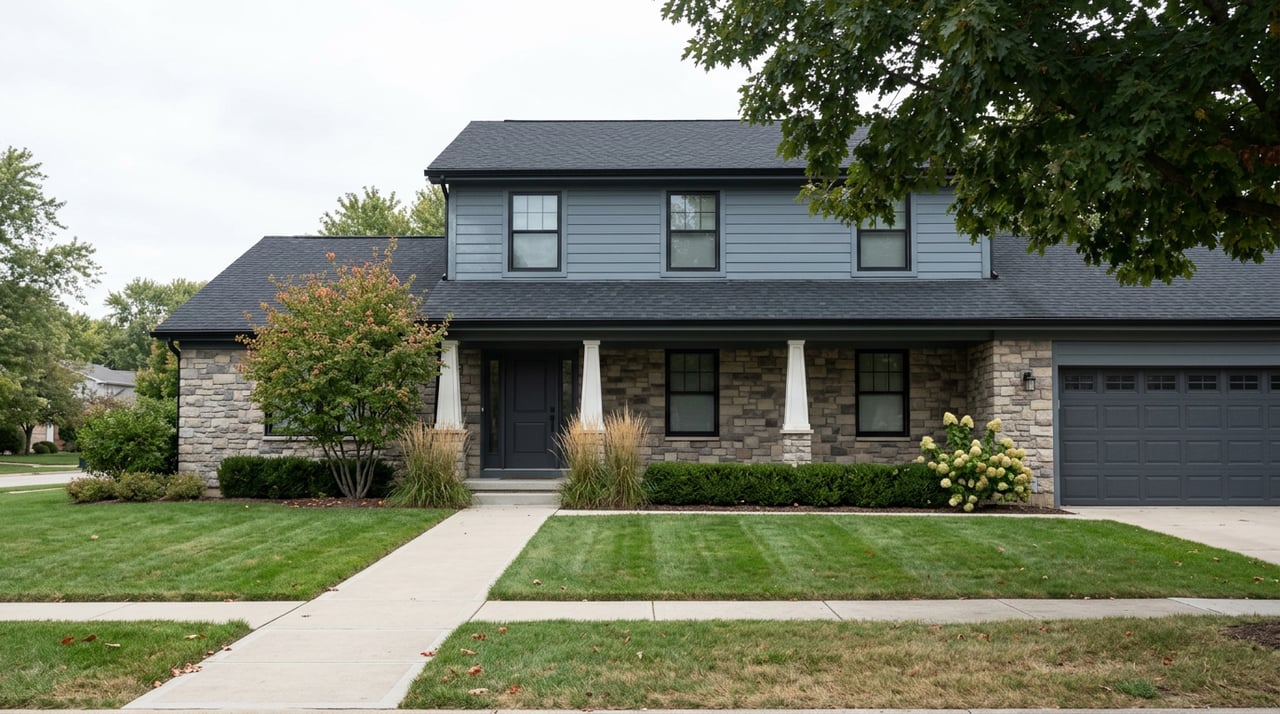
Cranberry Township’s 2026 Property Tax Increase: What Buyers Should Know
September 24, 2026
September 24, 2026
If you close on a home in Cranberry Township this fall, you will eventually open your first property tax bill and do a double take. The number on the page will not match the math you did in your head using the purchase price. That is not an error, and it is not you misreading the bill. According to Cranberry Township, Butler County still calculates assessed value using a base year set in 1969, so the figure your millage rate gets multiplied against has almost no relationship to what you actually paid for the house. It is a fixed, decades-old reference point that every property in the county shares, which means your assessed value and your market value are two entirely different numbers doing two entirely different jobs.
That disconnect matters for a reason beyond avoiding confusion at tax time. It is also the key to reading Cranberry Township's biggest local news story of the past year correctly: the Board of Supervisors approved a 2.5-mill tax increase as part of the 2026 budget, the township's first rate increase in some time. Seen in isolation, a tax increase sounds like a warning sign. Seen in context, it is closer to the opposite, and understanding why is genuinely useful if you are weighing Cranberry against other Butler County suburbs.
On December 11, 2025, Cranberry's Board of Supervisors approved a 2026 budget of roughly $109.5 million. Inside that budget, the township's general fund millage, the rate that pays for day-to-day operations, stayed exactly where it was. What went up was a brand new line item: a 2.5-mill levy dedicated entirely to a newly created Recreational Investment Fund.
Here is the full 2026 breakdown, mill by mill:
| Purpose | Mills |
|---|---|
| General operations | 8.03 |
| Fire services | 2.37 |
| Public buildings | 1.00 |
| Road equipment | 0.85 |
| Recreation investment (new) | 2.50 |
| Library | 1.00 |
| Total | 15.75 |
The recreation levy is projected to raise close to $1.2 million a year, and township officials estimated it at less than $60 annually for the average household. That is the specific number that changed. Everything else on the list held steady.
This is the distinction that gets lost in a headline. A township raising taxes to cover a widening gap between what it spends and what it collects is telling you something concerning about its finances. A township creating a new, ring-fenced fund for a defined list of capital projects, while leaving its operating budget untouched, is telling you something closer to the opposite: that it planned this increase years in advance, attached it to specific outcomes, and is not using it to patch a hole elsewhere.
The Recreational Investment Fund was not created around vague intentions. It funds a specific list of projects that already had names, locations, and design work attached before the levy passed.
At the UPMC Passavant Sportsplex at Graham Park, the fund is paying for solar lighting upgrades and a new outdoor fitness court, a 38-by-38-foot circuit training installation built through a National Fitness Campaign grant that the township secured for $30,000 as part of the Cranberry Foundation's 2026 Project of the Year initiative. At Community Park North, the fund is supporting two new multipurpose recreation fields on the parcel near the Rotary Dog Park, a project that separately landed a $2.8 million Land and Water Conservation Fund grant, with Thomas Construction Inc. handling general construction, Shipley Plumbing LLC on the plumbing contract, and McCurley Houston Electric Inc. covering electrical work. At Powell Farm, the money goes toward new equipment, irrigation, and planting upgrades.
None of this was improvised. Every one of these projects traces back to the township's Greenways and Open Space Plan, adopted in 2025, and the Recreation, Park and Open Space Plan, adopted in 2024. The levy is the funding mechanism for a plan that already existed on paper. That sequencing, plan first, levy second, is exactly what you want to see if you are trying to judge whether a local government is investing with intention or reacting under pressure.
Bruce Hezlep, chairman of the Board of Supervisors, put the overall municipal tax picture this way when the budget passed:
"For under $90 a month, the median household helps support an array of programs, services, and general operations that make Cranberry Township a place people want to live, work, and play."
Worth being precise about scope here: that under-$90-a-month figure describes the median household's total township tax contribution across every fund, police, fire, library, parks, roads, and general operations combined, not the 2.5-mill recreation levy alone. The recreation fund itself is the smaller piece, the roughly $60-a-year add-on layered on top of a municipal tax bill that, in total, is still modest relative to what it covers.
Cranberry Township holds a Moody's Aaa bond rating, and it is one of only 14 municipalities in Pennsylvania, and the only one in western Pennsylvania, to carry that distinction. Bond ratings exist for lenders, not homebuyers, but they are a useful outside check on a claim a township makes about its own finances. An Aaa rating means outside analysts, not just the township's own press releases, looked at Cranberry's books and concluded the debt load, revenue base, and management practices are about as strong as municipal finance gets.
That rating survived a tax increase. If the 2.5-mill levy had been a sign of fiscal strain, that is exactly the kind of thing a rating review would flag. Instead, the increase went toward a self-contained investment fund with a defined project list, while the operating side of the budget stayed level, which is the version of a tax increase that tends to reinforce a strong rating rather than threaten it.
For a buyer, this is the part worth sitting with. A rising millage number, on its own, tells you almost nothing about whether a place is managing its money well or poorly. What tells you something is whether the increase is attached to a specific plan with named projects and outside grant funding, like Cranberry's, or whether it is quietly closing a gap in the general fund with no defined end point. The first kind tends to show up later as new fields, new lighting, and new trails. The second kind tends to show up later as another increase.
If you are cross-shopping Cranberry against Mars, Adams, or another nearby township, the millage rate alone is not a useful comparison point. Two questions will tell you more:
For Cranberry specifically, the largest single portion of most residents' total tax bill still comes from the Seneca Valley School District, not the township. If you are trying to estimate your actual annual number before making an offer, that school district figure matters more than the township's mills, and it is worth requesting the seller's most recent school, county, and township bills together rather than estimating from the millage table alone.
Will the 2.5-mill increase show up on every Cranberry Township tax bill starting in 2026? Yes. It applies township-wide as part of the approved 2026 budget, layered onto the existing rate rather than replacing any part of it.
Does a higher assessed value mean a higher purchase price? No. Assessed value does not track current market prices. Two homes with similar market values can carry different assessed values, and vice versa.
Where can I check the exact mills that apply to a specific address? Cranberry Township's tax office, currently overseen by elected tax collector P.J. Lynd at the Municipal Center, can confirm current township, county, and school district mills for any parcel before you finalize a budget.
If you are weighing a move into Cranberry Township, or trying to figure out how a tax number you saw on a listing actually translates into a monthly payment, Chelsea Dolny can walk through the real numbers with you, parcel by parcel, before you write an offer. Let's Connect.
This article is general information, not legal, tax or financial advice. Consult a qualified professional about your situation.
Stay up to date on the latest real estate trends.
I am committed to guiding you every step of the way—whether you're buying a home, selling a property, or securing a mortgage. Whatever your needs, I've got you covered.
Chelsea Dolny
3150 Tampa RD Suite #8 Oldsmar, FL 34677 1667 PA 228 Ste 200 Cranberry Township, PA 16066